
The Jewelry of the Kitchen
Designers call hardware the jewelry of the kitchen, and it is an apt comparison: small pieces, outsized effect. The knobs and pulls are what your eye catches across the room and what your hand touches dozens of times a day. Outdated hardware — the chunky wooden knobs from the 1980s, the brass pulls that have gone spotty, the hinges that squeak — drags down even nice cabinets. Fresh hardware in a current finish lifts the whole room. It is the smallest project we do and one of the most immediately gratifying.
Hardware upgrades work two ways: as the finishing touch on a refacing, door replacement, or painting project, or as a standalone refresh when your cabinets are fine but the hardware is dated. Either way, the effect is immediate — you see and feel it the same day.
Knobs and Pulls: What to Choose
The options are wider than most people expect. Knobs — single-point pieces — suit traditional kitchens and smaller doors and drawers. Pulls — bar or handle shapes — fit modern kitchens and are easier to grip, which matters for drawers you open with messy cooking hands. Many kitchens mix them: knobs on doors, pulls on drawers, which is a classic combination that looks intentional.
Finishes set the tone. Brushed nickel and stainless are the versatile workhorses — they go with everything and hide fingerprints reasonably well. Matte black makes a crisp modern statement, especially against white or light cabinets. Brass and champagne bronze bring warmth and suit traditional and transitional kitchens. Oil-rubbed bronze fits rustic and craftsman styles. We bring samples so you can hold each finish against your cabinets and see what works.
Size matters more than people think. The current trend is toward larger pulls — a pull that spans a good portion of a wide drawer looks proportioned; a tiny knob on a big drawer looks lost. We will help you scale the hardware to your doors and drawers.
Soft-Close Hinges: The Upgrade You Feel
If your cabinet doors slam, the hinges are the reason — and soft-close hinges are the fix. A soft-close hinge catches the door in the last inch of travel and eases it shut silently. No more slamming, no more doors bouncing back open, no more startling the dog. It is a small mechanical change that transforms the daily feel of the kitchen.
We install soft-close concealed hinges — hidden inside the cabinet, fully adjustable. The adjustability matters: it lets us align every door precisely, with even gaps and no rubbing. Old hinges wear out, lose adjustment, and are often mismatched from years of piecemeal replacements. New hinges on every door is standard in our refacing and door projects, and available as a standalone upgrade.
Soft-Close Drawer Slides Too
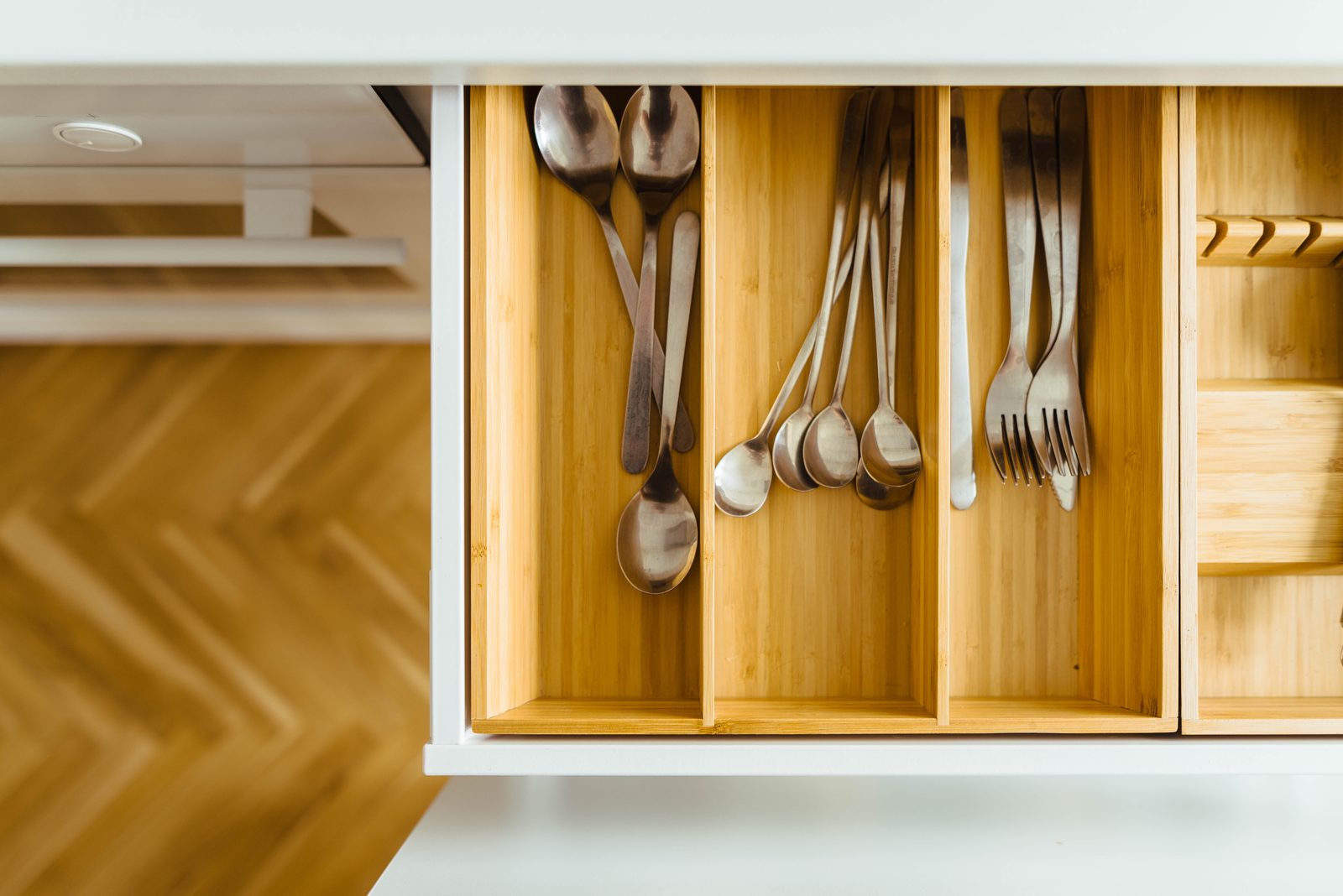
Drawers deserve the same treatment. Soft-close drawer slides replace the old metal tracks with glides that catch the drawer and pull it shut silently. Full-extension versions let the drawer come all the way out, so the back of the drawer is actually reachable — no more lost spatulas in the dark recesses. If your drawers stick, slam, or fall off their tracks, new slides fix the mechanics and the feel in one move.
The Hole Problem (and How We Solve It)
The fiddly part of a hardware swap is the holes. Old knobs leave one hole; new pulls need two, spaced precisely. Old pulls were a different width than new ones. Moving from exposed hinges to concealed hinges leaves old screw holes on the frame. We handle all of it: filling old holes, touching up the finish so the repairs disappear, and drilling new holes in exactly the right spots using jigs — not eyeballing. A hardware upgrade should look like the cabinets were always meant to have this hardware, and precise hole work is what makes that true.
This is also why hardware is trickier as a DIY project than it looks. One mismeasured hole in a finished door is permanent, and drilling freehand through a $200 door front is a stressful moment. We do this every day, with jigs and measurements, and we guarantee the placement.
How It Works: Our Process
Step 1 — Free visit. We look at your current hardware and hinges, talk styles and finishes, and bring samples.
Step 2 — Selection. Knobs or pulls, finish, size — chosen against your actual cabinets.
Step 3 — Written estimate. Hardware, hinges or slides, and labor. Every project is different — contact us for a free written estimate.
Step 4 — Install day. Old hardware off, holes filled and touched up, new hardware drilled and fitted, hinges adjusted. Most kitchens take a day.
Step 5 — Walkthrough. Every door and drawer opened, closed, and checked with you.
When Hardware Alone Is Enough
Be honest about your cabinets: if the doors and finish are in good shape and genuinely suit your taste, but the hardware is dated, a hardware upgrade alone can be the right call. New pulls, new hinges, and suddenly the kitchen feels updated. It is the lowest-cost change with the highest immediate impact. But if the doors themselves are worn or the style bothers you, hardware is a bandage — lovely, but a bandage. In that case, pair it with new doors or a full reface and do it once, properly.
Care for New Hardware
Wipe pulls and knobs when you wipe the counters — a damp cloth handles the cooking film that builds up. Avoid harsh chemicals on specialty finishes like brass or bronze. Check hinge screws once a year; a quarter-turn keeps doors aligned. That is the entire maintenance routine.
Call (301) 679-9193 or send the form below for your free on-site estimate.